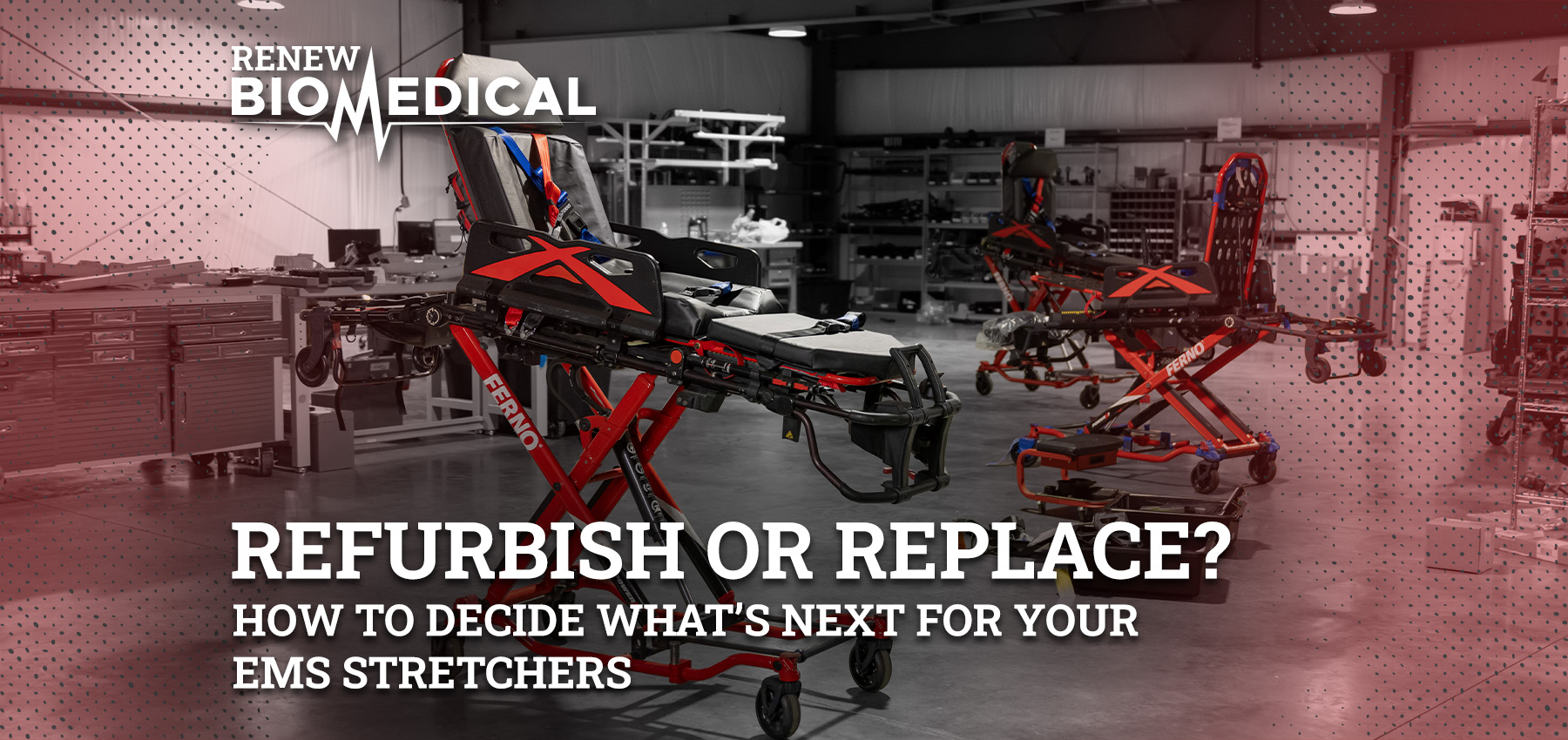
Refurbish or Replace? How to Decide What’s Next for Your EMS Stretchers
Last Updated
November 9, 2026
It’s a familiar situation: a heavily used stretcher is worn and needs repair. Eventually, it will need to be entirely replaced. With any aging unit, at some point, you’ll have to ask if refurbishment makes sense or if replacement is the better investment. How can you decide which to do?
Assess the Unit’s Condition and History
Review the history of the specific stretcher in question. Has it had recurring problems? Costly previous repairs? Has it needed extensive maintenance? What condition is it in now? As stretchers are used in unpredictable environments and on ambulance rides, cosmetic wear is a natural result of the stretcher’s function and does not necessarily require professional assessment.
When to Refurbish
Refurbishing is a process of overhauling a used stretcher to return it to manufacturer specifications.Although refurbished stretchers are not new, they are not a compromise on functionality, safety, or performance and are a cost-effective alternative to replacement. Our technicians can often repair and refurbish your stretcher for less than half of the cost of a new one.Every refurbishment will be unique since every stretcher will have slightly different needs. If your stretcher still meets your agency’s operational needs, check with ReNew before replacing it. We’ll evaluate your stretcher and advise you on recertification:
- Whether the condition of the unit supports refurbishment
- The cost of the proposed work
- The scope of the proposed work: components inspected, parts replaced, cosmetic restoration, and functional testing
Some Questions to Ask Your Stretcher Refurbishment Provider:
- What does the initial evaluation include?
- What work and replacement parts are included in the quote?
- How is the stretcher tested before being returned?
- What service and testing documentation will we receive?
- What is the estimated turnaround time?
- What warranty and ongoing service options are available?
When to Replace
- Your current unit no longer meets the agency’s equipment or workflow needs
- Recurring issues and downtime make continued investment harder to justify
- Parts availability or service support limits options for your current unit
- An assessment identifies damage that makes refurbishment unsuitable
Considering Cost Variables
Before making your decision, compare the full cost of each option. Look beyond the simple refurbishment quote and purchase price. Consider expected maintenance, downtime, backup equipment, transportation, and warranty coverage. Compare the cost of ownership for both options over the same period of time.Getting an evaluation by a biomedical technician is crucial so that you have all necessary information to make your decision. Condition, service history, operational fit, and total cost are all variables that should guide your choice. ReNew Biomedical has recently expanded our stretcher department to allow us to outfit entire ambulance fleets with refurbished stretchers. All recertified stretchers go through a thorough repair and testing process by our AAMI-certified technicians to confirm that every unit meets or exceeds the manufacturer’s original standards. Our stretchers can handle your team’s heavy workload, keep patients safe, and deliver long-lasting performance for years to come.Considering refurbishment for your EMS stretchers? Contact ReNew Biomedical to request an evaluation and discuss the next step for your fleet.