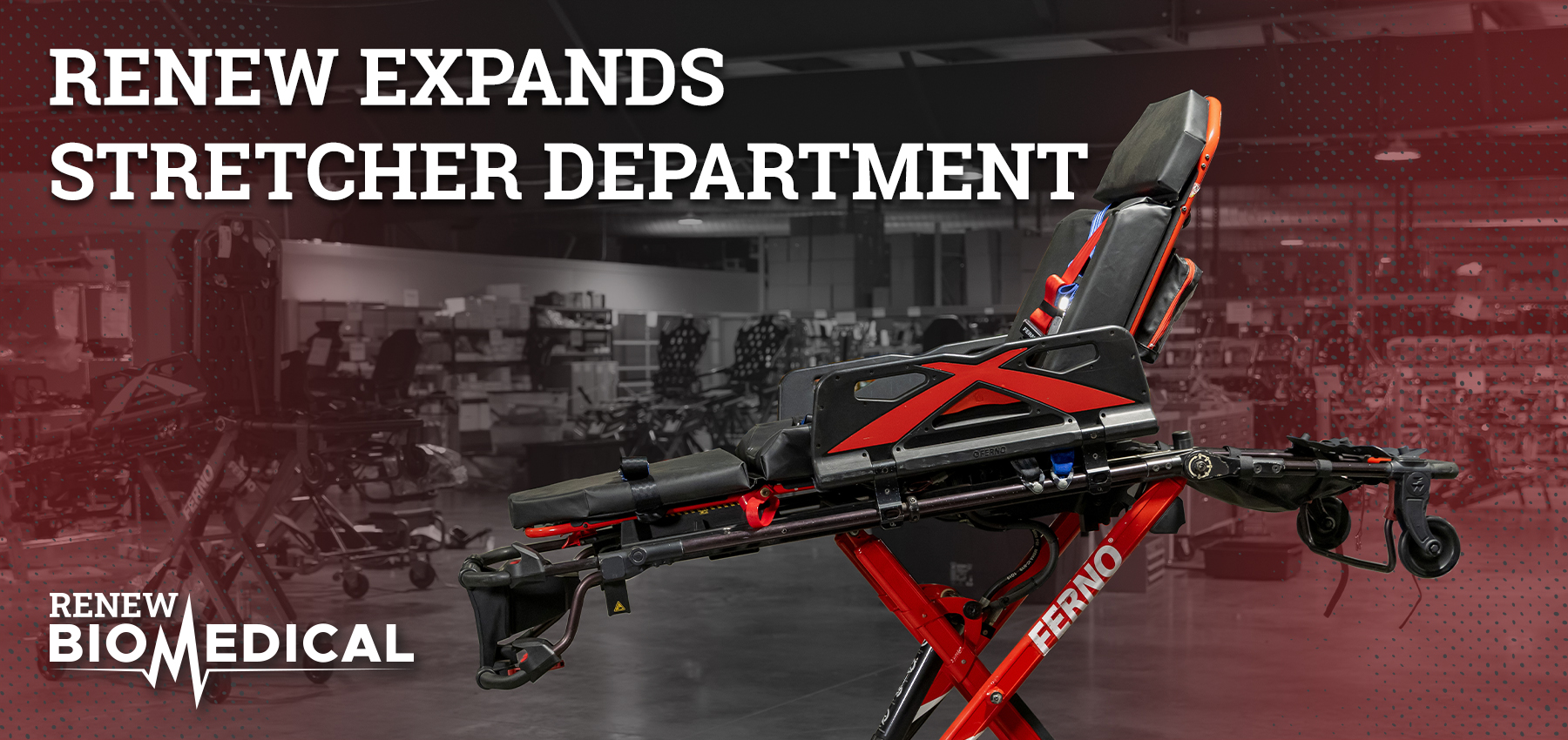
EMS rely on stretchers to keep their patients safe on the bumpy ride to the hospital. If proper precautions are not taken, the transport process can cause new harm to the patient, especially those with spinal injuries. Stretchers are carefully engineered to provide the patient protection from motion, gravity, mechanical failure, and human error. And that protection depends heavily on whether their stretcher is functioning exactly as designed.
ReNew Biomedical has spent years repairing, servicing, and recertifying EMS stretchers (especially models from manufacturers like Stryker and FERNO). We’ve learned that every bolt, latch, strap, hydraulic seal, and locking mechanism plays a role in protecting a patient during one of the most vulnerable moments of their life.
A War With Physics: Keeping Patients Stationary
Ambulances brake hard. They corner fast. They hit uneven pavement. Patient safety in the ambulance usually means keeping an injured patient as immobile as possible during those twists and turns. Every part of the stretcher works together to fight against the jerky motions of a moving vehicle, but those safety features only work when they’re properly maintained. At ReNew Biomedical, we rigorously inspect and test every safety mechanism on every stretcher that comes through our doors.
- Restraint straps: Modern stretchers use multi-point restraint systems (chest, waist, legs, and often shoulder harnesses) designed to distribute force during sudden deceleration. But restraints can fail, so make sure to always check for frayed belts or broken buckles.
- Fasteners: The locking interface between stretcher and ambulance secures the stretcher to the floor of the ambulance so it doesn’t roll around during treatment and prevents injuries in the event of a collision.
- Hydraulic lift systems: These allow EMTs to gently raise and lower patients with the push of a button rather than manpower. This prevents abrupt and jerky movements that can exacerbate injuries AND protects the healthcare provider from strain and overexertion. However, powered systems introduce complexity and should be regularly serviced by a qualified technician.
- Guard rails: Side rails prevent lateral movement and falls. Some stretchers (such as the Stryker Power-PRO XT) even feature rails that fold down to provide expanded space for larger patients.
How ReNew Biomedical Protects Patients Through Refurbishment
Each of these patient safety mechanisms must be rigorously tested before use. ReNew’s high standards and thorough testing mean you can trust our stretcher parts to function as intended to keep healthcare providers and patients safe. Our extensive inventory of stretcher parts means worn-out straps and guard rails can be replaced so your equipment continues to be its best and your patients continue to receive the best, safest care possible.We restore stretchers to meet or exceed original manufacturer performance standards, because EMS agencies trust that equipment with lives.
Ready to Keep Your Stretchers Patient-Safe?
ReNew Biomedical specializes in high-standard stretcher refurbishment that prioritizes mechanical integrity, safety compliance, and performance reliability.
Contact ReNew Biomedical today at 866-518-3010 or email service@renewbiomedical.com to schedule an evaluation and learn how we refurbish stretchers to the highest safety standards.
Interested in buying recertified stretchers for your fleet? Buy stretchers re-certified by ReNew Biomedical from our distribution partner, Master Medical Equipment.